

By Nyeleti Nyathi
From being a bullied child in the quiet town of Phalaborwa, Limpopo, to becoming a rising bold, UL’s most outspoken young leaders, and politically active student leader, Thapelo Neo Nkoane is redefining what it means to lead with proving that courage isn’t loud it’s consistent. Now a Bachelor of Arts student majoring in History and Anthropology, he has become a visible voice for equality, inclusion, and the kind of social change rooted in lived experience.
His political awakening began long before he stepped into student structures, it was shaped by early hardship. “Growing up was tough. I was bullied at a very young age,” he reflects. “But I realized that the mind is a powerful tool. Once you liberate it, you can change your life and those around you.” The strength he lacked as a child eventually became the backbone of his activism.
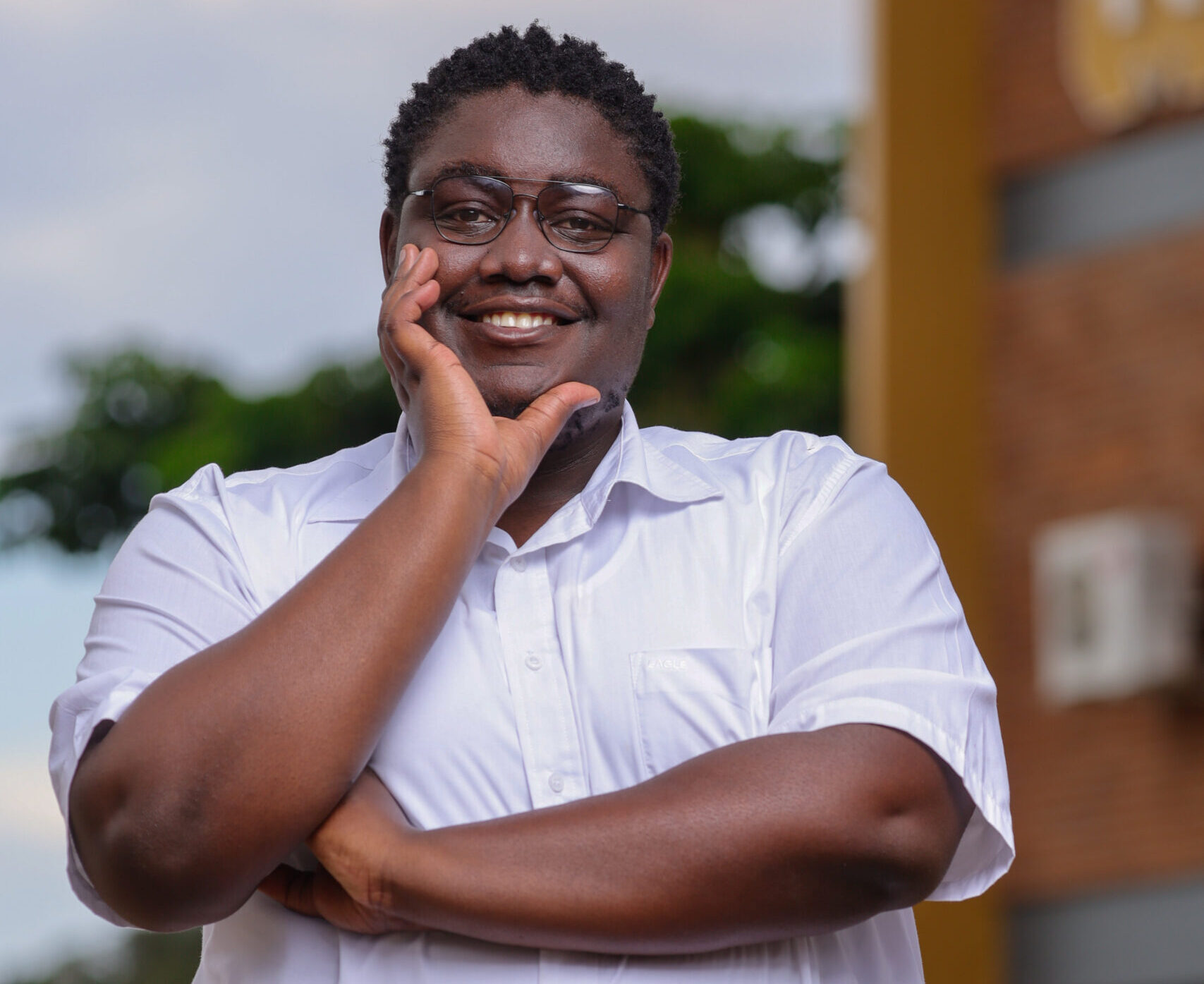
Meet Thapelo Neo Nkoane, Redefining what it means to lead, change norms and shape voices Photo by: Forgive Hlungwane
A proud member of the LGBTQI+ community, Nkoane doesn’t shy away from identity. Instead, they/them uses it! It stands at the centre of his political work. Inspired by the late queer anti-apartheid activist Simon Nkoli, he believes in the power of representation is not just symbolic it’s necessary.
“People hate what they don’t understand. So, I knew that by entering political spaces, I could educate, represent, and shift mindsets.”
Today, Nkaone serves at provincial level within the South African Students Congress (SASCO) and remains an active member of the ANC. They/ them work focuses on gender equity, student rights, and policies that support inclusive education. His academic research on race, gender, and LGBTQI+ marginalization in higher education continues to contribute to broader national conversations on transformation.
One of his proudest moments came in his first year, when he served as a Gender-Based Violence Ambassador. After addressing a large student audience, he watched conversations shift; especially among young women challenging cultural norms and inequality. “That’s when I realised the power of open conversations,” he says.
Thapelo credits strong women, from Winnie Madikizela-Mandela to his sister, Adelaide Nkoane; for grounding his voice and her constant support. “Adelaide? She just gets me. We talk about politics, race, gender, psychology conversations that many people dismiss.”
Looking ahead, Nkoane plans to publish more critical papers, establish student structures focused on gender justice, and sharpen his public-speaking voice as a tool for transformation. He recently represented the University of Limpopo at the Jozi Rumble hosted by Wits University, where he reached the semi-finals in both debate and public speaking a testament to the voice he’s refining.
“I’ve reached the semi-finals in every debate tournament I’ve attended this year. For someone who isn’t familiar with debate, it may seem like I’m not progressing but the intensity and difficulty increase with every tournament. At the end of the day, I remind myself with pride, it’s my first year in debate, and I’ve shown consistency.”
However, beyond activism and accolades, Nkoane’s journey is also deeply personal rooted in healing, reflection, and becoming the version of themselves they/them once needed. They/Them wishes younger students knew that their struggles are not stains but foundations.
“I used to be ashamed of the struggles I faced as a younger version of myself, until I realised that my greatness is deeply connected to who I once was. The chapters I wanted to skip have now become the most important parts of my story. What amazes me is that I’m finally in a position to give my younger self what they always needed wisdom, healing and love.”
Nkoane believes the real tragedy isn’t failure, but leaving the world before it truly knows who you are. And if there is one lesson he’s certain of, it’s that fear is rarely real; just “false evidence appearing real,” as he puts it.
“Fear will always try to hold you back, but remember FEAR stands for False Evidence Appearing Real. Don’t let it stop you. You’re not extraordinary, you’re simply someone who chooses, every day, to make extraordinary decisions,” he advices younger students.
You can follow his journey on Instagram and Facebook @its_pollyanna or better yet, engage him in dialogue. As Thapelo reminds us “Our voices, combined, can reshape the future.”

